Love Keeps Score | Fifty-Three Years of Knicks Hope, Fathers, Sons and Jalen Brunson
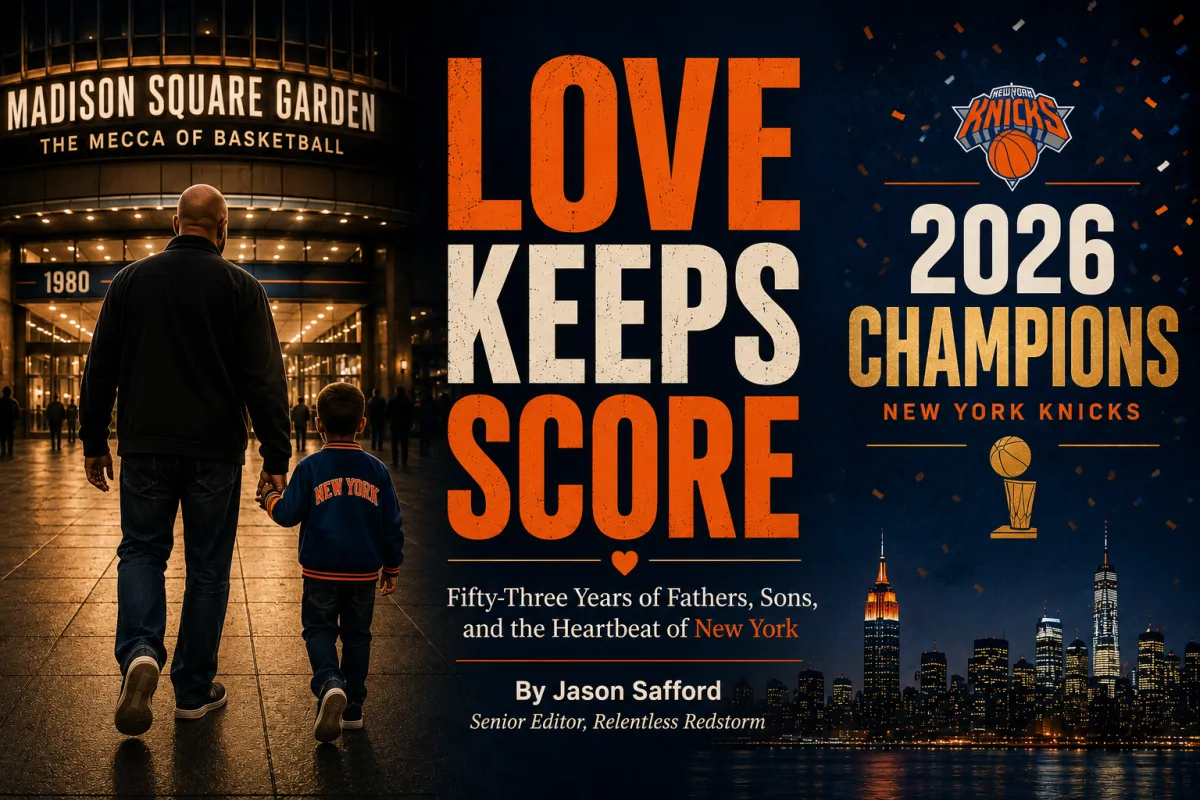
LOVE KEEPS SCORE
Fifty-Three Years of Fathers, Sons, and the Heartbeat of New York
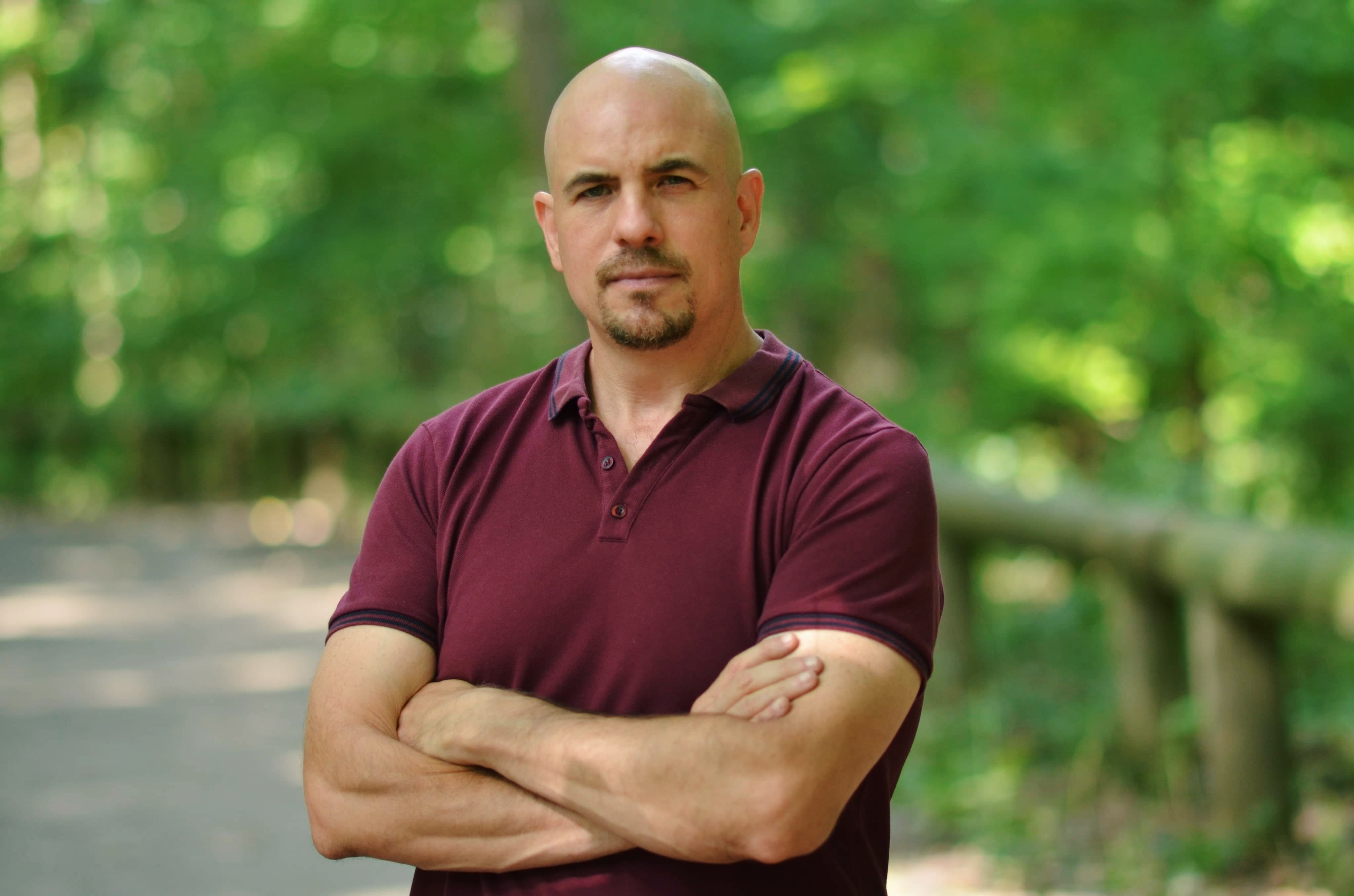
By Jason Safford
Senior Editor, Relentless Redstorm
Sleep should have won.
Ninety years had earned my father that right. Midnight had disappeared hours earlier. Confetti drifted through the air in San Antonio while Jalen Brunson embraced his father near half court. Somewhere in the quiet comfort of his own home, the same man who first held my hand walking into Madison Square Garden forty-six years earlier stayed awake long enough to watch the Knicks become champions.
Nothing about that surprised me.
Morning brought laughter.
Time had taken some things. Yet the laugh sounded unchanged. Forty-six years vanished inside that sound. I heard the same joy that followed us down Seventh Avenue after my first game and the same voice that unfolded newspapers beside coffee cups and box scores. Without ever saying it aloud, I recognized the truth that had quietly followed us for nearly half a century.
Basketball had given us a language.
Not the game.
The language.
Long before I understood that hope and heartbreak often wear the same colors, my father placed me inside a story much larger than basketball. Somewhere between Earl Monroe and Jalen Brunson, basketball gave fathers and sons a way to tell each other they loved one another without ever needing the words.
Perhaps that explains why New York carried this championship differently.
Relief arrived before joy. Car horns echoed across boroughs. Strangers hugged strangers. Sons called fathers. Fathers called sons. And beneath all that beautiful noise, another sound emerged.
Laughter.
Old Knick fans laugh when they cry.
Maybe that was always the story.
Not the trophy.
Not the banner.
Us.
Forty-six years earlier, my father held my hand and led me into Madison Square Garden.
Neither of us knew we had just begun carrying each other home.
Winter wind pushed against our coats as my father and I stepped onto Seventh Avenue.
Five years old.
Small enough to disappear inside the crowd.
Big enough to remember everything.
Steam rose from subway grates. Taxi horns argued beneath bright lights. Thousands moved toward Madison Square Garden like pilgrims. All I saw was my father's hand and the building waiting ahead.
Then the darkness opened.
Wonder stopped me.
Orange and blue stretched beneath lights brighter than anything I had ever seen. Thousands of voices rose together. Somewhere below, Earl "The Pearl" Monroe glided through the final season of a beautiful career.
Yet another giant captured my imagination.
Marvin Webster.
The Human Eraser.
Arms stretched forever. Blocks exploded from impossible angles. Possibilities rose with him above the rim. A little boy watched seven feet of promise touch the sky and quietly fell in love.
Children understand forever differently.
Heroes stay young.
Tomorrow promises more.
Life teaches otherwise.
Years later, I realized Marvin Webster represented New York itself. Expectations surrounded him. Dreams followed him. Injuries arrived. Possibilities drifted away.
Yet the city kept playing.
Barber shops argued. Radios crackled. Summer heat covered blacktops from Queens to Harlem. Basketball moved through neighborhoods the way music escaped open windows.
Long before books taught me resilience, New York taught me rhythm.
Somewhere between the cheers and cigarette smoke, while my father smiled beside me, something entered my heart that never left.
Not certainty.
Love.
And like every great love story, it would spend the next fifty years teaching both of us how to suffer, how to hope, and eventually, how to laugh.
All I knew that night was my father squeezing my hand as we stepped back onto Seventh Avenue.
Forty-six years later, I can still feel it.
Madison Square Garden gave me wonder.
New York gave me identity.
Long before rankings and highlights arrived, summer belonged to basketball. Sneakers came out. Dinner interrupted games. Streetlights delivered the only curfew that mattered.
The city played everywhere.
Rucker raised legends. West Fourth tested pride. Soul in the Hole mixed music with joy. The Rock welcomed dreamers. Yet every neighborhood protected its own court.
Mine lived closer to home.
A garbage can became our basket. Driveways became arenas. Winners stayed. Losers waited. Respect traveled by word of mouth. Somewhere between scraped knees and bruised egos, basketball quietly introduced lessons adulthood would later repeat.
Nobody taught us resilience.
The game did.
Saturday mornings carried their own rituals.
Before cartoons arrived, box scores demanded attention. Pearl stories became Clyde stories. Smiles appeared. Memories followed. Somewhere between laughter and arguments, love quietly changed hands.
Mine certainly did.
Long car rides became classrooms.
"How good was Wilt?"
"What made Earl special?"
"Could anybody stop Kareem?"
Answers became stories. Stories became memories. Memories became inheritance.
Back then, New York spoke the same language. Construction workers argued over lineups. Cab drivers defended championships. Barber shops delivered stronger opinions than television ever could.
Nobody needed a championship to love the Knicks.
We already belonged to each other.
Then Bernard King arrived.
Nobody attacked joy the way Bernard attacked defenders.
His release felt too quick to follow. One moment the ball rested in his hands. The next it floated through the net. The turnaround jumper seemed unfair. Defenders knew it was coming. They just couldn't stop it. And when fourth quarters arrived, something changed. The game slowed. Bernard didn't. Big shots never seemed to frighten him. They invited him.
To a kid, he felt inevitable.
Every duel with Larry Bird felt larger than basketball. Across the city, kids practiced turnaround jumpers while pretending to wear number thirty. The hoop in my bedroom testified to that truth. I practiced that turnaround so often I convinced myself I had it. I didn't. Nobody did.
Morning carried its own rituals.
Coffee steamed beside my father's newspaper. Sunlight crossed the kitchen table. Before breakfast ended, he'd tap the box scores with his finger and smile.
"Bernard had thirty-eight last night."
Sometimes he already knew I'd seen it. That never stopped him from telling me again.
Children believe in forever.
Then came 1985.
Forty points stopped surprising us. Fifty-point explosions felt inevitable. Hope grew reckless. Championships felt close.
Then everything changed.
I still remember the disbelief.
Not anger.
Not sadness.
Disbelief.
Kids believe greatness lasts forever. Bernard had become part of the rhythm of our days. His points greeted us with breakfast. His highlights followed us into school and work. Somewhere along the way, we stopped imagining life without him.
Then the headlines changed.
I remember sitting at the kitchen table staring at the newspaper while my father quietly read beside me. Neither of us said much. We didn't need to. The silence explained enough.
Another dream had disappeared before reaching its destination.
Breakfast continued. Coffee sat hot. Newspapers still unfolded. My father still sat in the same chair.
Life kept moving.
And basketball quietly introduced another lesson.
Greatness disappears.
Love doesn't.
Then whispers drifted through subway cars and barber shops.
Seven feet.
Georgetown.
Olympic gold.
Broad shoulders.
Patrick Ewing.
For the first time since Clyde and Willis, New York spoke one word without laughing.
Championship.
The city buzzed. Newspapers sold faster. Conversations grew louder. Every rebound, every blocked shot, every glimpse of number thirty-three felt like destiny unfolding. Patrick didn't simply arrive.
He carried our future.
Outside basketball, I grew taller. Dreams evolved. Gray quietly appeared in my father's hair.
Yet every morning remained faithful.
And somewhere inside those pages, Patrick Ewing waited for both of us.
The king had fallen.
The giant had arrived.
And New York believed again.
Nobody warns you how quickly life accelerates.
College arrived just as the Knicks rose again. Riley prowled the sidelines. Starks fired without fear. Oakley protected everyone. At the center stood Patrick Ewing, carrying the hopes of a city that had waited too long.
He belonged to us.
Spring after spring, friends crowded around televisions. We argued. We celebrated. We suffered. Heartbreak kept arriving.
Still, Patrick returned.
So did we.
Meanwhile, adulthood accelerated. College ended. Careers demanded mornings and nights. Box scores replaced broadcasts. Yet number thirty-three remained.
Years later, I realized what I admired most.
Not the statistics.
The burden.
Patrick carried disappointment without surrendering dignity.
Meanwhile, my father grew older. Every season brought us back to the same questions.
"Did you watch?"
"What did you think?"
"Maybe this year?"
Basketball carried the deeper conversations.
And somewhere between ambition and responsibility, while Patrick Ewing kept carrying New York, I slowly learned what carrying meant.
Time never asks permission.
Careers expanded. Friends drifted. Gatherings grew smaller. Somewhere along the way, basketball stopped demanding attention and started offering companionship.
Then grief entered.
My mother passed away. After decades beside her, my father faced mornings alone. Her chair sat empty. Holidays sounded quieter. Familiar routines suddenly felt unfinished. Widower sounded like a word that belonged to someone else.
Yet seasons continued.
And somewhere inside that silence, the Knicks remained.
Not as escape.
As company.
The phone always rang.
"Did you see that one?"
"Same old Knicks."
Laughter usually followed.
Life surprised me too. My first son arrived at 40. Responsibility arrived disguised as joy. Marriage and fatherhood grew into a full-time role.
By then, players mattered less than conversations.
The games mattered. The scores mattered. But somewhere along the way, ten minutes discussing the Knicks became forty minutes talking about everything else.
"What did you think of that fourth quarter?"
"Terrible."
Laughter followed.
Then came the real questions.
"How's work?"
"How's your wife?"
"How's Andrew?"
Some nights we spent more time talking about doctor appointments than pick-and-rolls. Complaints about referees gave way to stories about grandchildren. The final score slowly surrendered importance to the sound of his voice.
Without either of us recognizing it, basketball had quietly become companionship.
The games brought us together.
The conversations kept us there.
Years left their marks.
Eighty.
Eighty-five.
Ninety.
Loyalty remained untouched.
"Think they got a shot this year?"
Neither the question nor the answer ever changed.
Looking back now, spring had already begun.
Then came Jalen Brunson.
Old fans protected their hearts. Number Eleven ignored the noise. Slowly, something familiar stirred across the city.
Recognition.
My father recognized responsibility.
So did I.
Great stars usually announce themselves.
Jalen Brunson never bothered.
By the time Game Five arrived in San Antonio, forty-five points no longer felt extraordinary.
They felt inevitable.
Game Five never created Jalen Brunson.
Game Five revealed him.
Then the buzzer sounded.
Car horns erupted. Tears arrived. Old men laughed. Fathers hugged sons.
At center court, the captain who had carried us all season became a son again.
At center court, the captain who had carried us all season became a son again.
Jalen Brunson wrapped his arms around his father.
No words followed.
Only gratitude.
Only love.
For the first time all night, I stopped celebrating.
I simply watched.
Then two little bodies came flying across the room.
My sons jumped on me, laughing, shouting, celebrating something they couldn't possibly understand. They knew Daddy was happy. They knew the Knicks had won. They knew joy had filled the room.
That was enough.
They didn't know Bernard's knees. Or Patrick's burden. Reggie Miller doesn’t exist.
All the winters meant nothing.
Good.
Children should inherit joy, not suffering.
As they wrapped their arms around me, I looked back at the television.
Jalen Brunson held his father.
My sons held me.
And for one perfect moment, I stood between the hand that first brought me into the story and the two little boys waiting for me to carry it forward.
Somehow, every Knick fan in New York stood inside that embrace.
Me included.
Sleep never came.
Too much joy filled the room. Too many memories crowded the night. Saturday night had delivered something none of us knew how to carry. Relief arrived first. Rejoicing followed. Somewhere beneath the car horns and celebrations, another feeling emerged.
Something deeper than relief greeted Sunday morning.
The city had spent all night celebrating, but somewhere between the car horns and the confetti, another feeling had quietly arrived. For the first time in more than half a century, Knick fans woke up not wondering when it would happen. We woke up knowing. Championships belonged to other cities for so long that certainty itself felt unfamiliar. Suddenly, belief carried weight.
Then the phone rang.
Age had softened my father's voice, but time had never touched his laugh. Forty-six years disappeared inside that sound. No speeches followed. No tears. Just two lifelong Knick fans laughing like boys who had somehow stumbled into a dream neither had ever stopped carrying.
"Can you believe it?" one of us finally asked.
Another laugh answered. It was the same laugh I heard walking down Seventh Avenue forty-six years earlier.
Maybe that was the answer.
After Bernard. After Patrick. After Jordan. After lottery nights and broken promises and all those Octobers that began with hope and ended with disappointment, we had finally crossed to the other side.
And maybe that was Jalen Brunson's greatest gift.
Through discipline, sacrifice, and relentless work, Number Eleven had reminded us what New York always loved most. Character. Resilience. Responsibility. The same values fathers tried to pass to sons. The same values workers carried onto trains every morning.
Outside, stores opened. Life moved forward, just as it always had.
Yet everything felt lighter.
Not because the journey had ended.
Because belief had returned.
And hearing my father's laugh that morning sounded every bit as beautiful as the final buzzer.
After fifty-three years, hope no longer stood alone.
At last, we carried proof.
Long before I understood that hope and heartbreak often wear the same colors, my father led me into Madison Square Garden. We thought we were watching basketball.
Life revealed everything else.
Years brought responsibility, grief, empty chairs, and love. Through every season, basketball stayed with us. Sometimes loudly. More often quietly.
Tonight, the city has finally grown silent.
Downstairs, my eight-year-old son sleeps peacefully. He'll never know Reggie Miller, Bernard's knees, or winters spent whispering, "Maybe next year." Good. Children should inherit joy, not suffering.
Somewhere tonight, my ninety-year-old father sleeps peacefully too.
Standing between those two gifts, I understand something no banner could ever teach. One man held my hand and brought me into the story. Another little boy waits for me to do the same.
Maybe one day I'll walk him through those doors.
And maybe I'll laugh.
Because he never had to.
That burden belonged to us.
This joy belongs to him.
Tonight, with my son dreaming downstairs and my father finally resting after staying awake long enough to watch the Knicks become champions, I understand what fifty-three years of hope and heartbreak have always tried to teach me.
We never carried fifty-three years waiting for a championship.
We carried fifty-three years of one another.
#Knicks #NewYorkKnicks #JalenBrunson #NBAFinals #MadisonSquareGarden
#LoveKeepsScore #FatherAndSon #BasketballFamily #BasketballCulture #TheMecca #JasonSafford #RelentlessRedstorm #SportsWriting #LongformJournalism #FeatureStory #NewYorkForever #NYBasketball #BasketballLivesHere #EmpireState #NYC #BernardKing #PatrickEwing #RickPitino #StJohnsBasketball #LeonRose