Rick Pitino’s $500 Million Impact: The Economic Engine Behind St. John's University Basketball
The $500 Million Tide
What the Basketball World Risks If Rick Pitino Walks Away
By Jason Safford
The rebound that lifted nineteen thousand people inside Madison Square Garden may also have been worth half a billion dollars.
The shot struck iron and jumped high above the rim.
Ten hands reached.
For a heartbeat inside Madison Square Garden, the noise stopped breathing.
Then a red jersey rose through the bodies.
Two hands secured the rebound.
The crowd exploded.
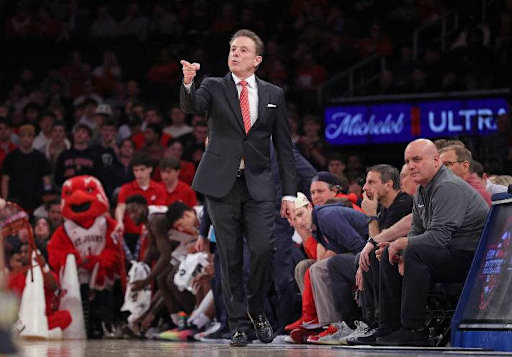
Nearly nineteen thousand surged to their feet as the ball snapped outward to the perimeter and the fast break began to unfold. On the sideline, Rick Pitino stepped forward and barked a command that cut through the roar.
The pass hit its mark.
The layup fell.
Madison Square Garden shook.
To the fans inside the arena, it looked like a single possession pushing St. John's University closer to another championship in the Big East Conference.
But high above the court, where television cameras hung from steel cables and corporate sponsors studied the crowd, the moment meant something larger.
Every rebound meant ticket sales.
Every win meant television exposure.
Every season of relevance revived a dormant New York basketball economy stretching from arena gates to donor suites to restaurants along Seventh Avenue.
In that instant the equation revealed itself.
A coach shouted.
A team responded.
An arena erupted.
And the engine Pitino rebuilt in New York roared again.
Because the real story unfolding inside Madison Square Garden was never just basketball.
It was what happens when one leader installs a system powerful enough to move an entire economic ecosystem.
The First Courts
Long before he stood beneath the lights of Madison Square Garden, a young Rick Pitino learned the game on New York’s outdoor courts.
Chain-link fences rattled in the wind.
Concrete cracked beneath worn sneakers.
Games began early and ran until the streetlights flickered on.
The city set the tempo.
Players learned quickly—or they sat.
Ball movement mattered.
Spacing mattered.
Speed mattered most.
Those lessons never left him.
Decades later, assistants describe Pitino’s practices the same way: relentless pace, constant pressure, no wasted motion.
What began on asphalt became a system.
And systems move more than basketballs.
The one Pitino carried from Providence to Kentucky, Louisville, Iona, and now St. John's University has moved arenas, television schedules, donor networks, and the pulse of a city’s sports economy.
Which is why the question surrounding Pitino in New York now reaches beyond the court.
When a system powerful enough to move half a billion dollars runs through one architect, the real risk is not how it begins.
It is what happens when the architect eventually walks away.
The Building Breathes Again
The first sign is the trains.
Two hours before tipoff, Long Island Rail Road cars begin filling with red jerseys headed toward Manhattan. By the time they reach Penn Station, the stairwells hum with the sound of college basketball again.
Subway doors slide open and spill fans onto the platforms. Taxi doors slam along Seventh Avenue. The sidewalks begin to move with a familiar rhythm.
Inside Madison Square Garden, a crew sweeps the hardwood beneath a forest of lights.
The building has known many eras.
The Knicks of Reed and Frazier.
The NCAA tournaments that turned March into theater.
The teams of Lou Carnesecca, when St. John's University basketball felt like a borough celebration that happened to take place in Manhattan.
Then the years grew quieter.
For a long stretch, St. John’s games at the Garden felt smaller than the arena itself.
The first people who noticed the change were not television executives.
They were the workers who move the city.
On game nights now, red jerseys appear in clusters along the LIRR tracks beneath Penn Station. Fans step off trains from Queens and Nassau County and move toward the arena entrances above Seventh Avenue.
“You can tell when St. John’s is good again,” one veteran Long Island Rail Road conductor said while watching passengers stream onto the platform before a recent game. “The cars get loud. Families, alumni, kids in jerseys. The energy changes before you even reach Manhattan.”
A few blocks away, restaurant owners notice the shift as well.
At a small bar near the arena, televisions glow with pregame coverage while fans gather around the counter.
“Three years ago these nights were quiet,” the owner said, nodding toward the crowd. “Now when St. John’s plays at the Garden, the whole neighborhood feels it.”
Economists call it a ripple effect.
New Yorkers recognize it more simply.
When the trains fill again, the city knows something is happening.
And when Rick Pitino stepped onto the sideline for St. John’s, the building began to breathe again.
Crowds grew.
Television cameras widened.
And a basketball program that once felt dormant began behaving like an economic engine.
Winning Twice Changes Everything
One championship can feel like lightning.
Two begin to look like infrastructure.
St. John’s has captured consecutive regular-season titles in the Big East and enters the conference tournament as the No. 1 seed for the second straight year.
The revival restored more than competitive relevance.
It restored economic gravity.
Madison Square Garden now hosts roughly thirteen St. John’s games each season, many approaching sellout crowds.
Television networks schedule the team more often.
National rankings return.
Boosters open their wallets.
Winning once energizes a fan base.
Winning twice stabilizes an economy.
The Economic Engine Beneath the Court
Fans see points and rebounds.
Economists see something larger.
Major college programs function as economic clusters, moving money through multiple layers at once.
Restaurants near Penn Station fill on game nights. Long Island Rail Road trains arrive packed with fans from Queens and Nassau County. Merchandise sales climb. Media coverage multiplies.
Near the escalators inside Penn Station, a transit police officer watches the pattern unfold.
“You can tell when St. John’s is good again,” he says, nodding toward the stream of red jerseys moving toward Seventh Avenue. “The station gets loud before tipoff. Families, alumni, kids in jerseys. The whole place starts moving toward the Garden.”
Upstairs, the lights of Madison Square Garden glow over the avenue.
The revival of St. John's University basketball now drives activity across multiple sectors:
• Madison Square Garden ticket revenue
• national television exposure
• NIL investment and donor contributions
• university fundraising visibility
• transit and hospitality spending
Analysts studying the program estimate the ripple could approach $500 million in cumulative economic impact over the next decade if the current trajectory continues.
One coach did not build New York City.
But one coach helped restart a powerful part of its sports economy.
The Louisville Warning
To understand the risk behind success, analysts often look south.
For sixteen years, Rick Pitino built one of college basketball’s most formidable programs at University of Louisville.
The arena filled.
The Cardinals became a national brand.
March basketball in Louisville became a civic ritual.
Between 2013 and 2015, Louisville averaged 21,571 fans per game, among the largest crowds in college basketball.
Then came the scandal that forced Pitino’s abrupt exit in 2017.
The economic aftershock appeared quickly in the turnstile numbers.
Within two seasons, attendance fell to 16,601 fans per game by 2018–19, a 23 percent decline from the Pitino-era peak. The scanned-ticket totals, fans who actually passed through the arena gates, fell even more sharply, from 20,846 in 2017 to 11,965 in 2018, according to ticket data compiled by The Crunch Zone.
On paper the program still existed.
But the gravity had shifted.
Crowds thinned.
Television windows narrowed.
The national spotlight moved elsewhere.
For sports economists studying leadership-driven revenue systems, Louisville became an instructive case.
The data showed how quickly momentum built over decades can erode once the architect of that momentum disappears.
In major college athletics, the economic center of gravity sometimes rests on one figure.
When that figure leaves suddenly, the shock rarely stays inside the locker room.
It moves through the entire ecosystem.
Following the Money
If the revival of St. John's University basketball feels dramatic inside Madison Square Garden, the financial impact becomes clearer once analysts trace where the money moves.
Sports economists say the pattern surrounding Rick Pitino is not anecdotal.
It is measurable.
Ticket demand offers the first visible signal. In several seasons before Pitino’s arrival, St. John’s games at Madison Square Garden drew crowds averaging fewer than 9,000 fans. Over the past two seasons, attendance has surged, with many games approaching the arena’s 19,000-seat capacity and resale markets reporting sharply increased demand for marquee matchups.
For economists, those numbers are not just about basketball.
They are the opening indicator of a larger financial chain reaction.
Dr. Ryan Brewer, a finance professor at Indiana University–Columbus who studies the economics of college athletics, describes the phenomenon as a financial multiplier.
“Ticket demand, media exposure, donor engagement, and institutional visibility all move together,” Brewer said in one of his studies. “When a program becomes nationally relevant, the economic ripple extends far beyond the arena.”
In other words, the court becomes the spark for a much larger financial ecosystem.
The effect is amplified in New York, where the revival of St. John’s has returned major college basketball to one of the world’s largest media markets.
A senior executive within the Big East Conference described the impact simply.
“When St. John’s is competitive, it elevates the entire conference. When the Garden is full and the Red Storm are nationally relevant, television partners notice.”
Broadcast exposure drives conference revenue.
Conference revenue strengthens programs.
And suddenly one team’s revival begins influencing the trajectory of an entire league.
The NIL Economy
Another layer of the revival flows through the rapidly expanding NIL market.
Modern college athletics now operate in a hybrid economy where donor-backed collectives help fund athlete compensation.
Few supporters have been more visible in St. John's University’s resurgence than entrepreneur Mike Repole.
Repole, a Queens native and founder of several beverage companies, describes his investment as both loyalty and strategy.
“New York deserves a great college basketball program,” Repole said while discussing his support for the team. “When the program wins, the entire university benefits.”
For investors like Repole, NIL funding functions almost like venture capital.
Winning increases visibility.
Visibility strengthens recruiting.
Recruiting sustains performance.
The cycle reinforces itself.
In economic terms, the program becomes a platform.
The Pitino Economic Index
To quantify the scale of the transformation, analysts studying the Pitino Economic Index (PEI) say the phenomenon surrounding Rick Pitino reflects a broader leadership principle.
Programs rarely rise because of one roster or one season.
They rise when leadership installs systems that sustain performance.
The framework measures leadership-driven economic lift across four categories:
Performance
Winning percentage and tournament success.
Revenue
Ticket sales, media contracts, and sponsorship.
Visibility
National rankings, broadcast exposure, and recruiting influence.
Post-Exit Stability
Attendance and revenue patterns after leadership transitions.
Across six programs coached by Pitino, the model reveals a striking pattern.
When his system takes hold, programs generate roughly $40–45 million in annual economic lift through attendance, exposure, and donor engagement.
When that leadership disappears abruptly, institutions often lose 40–70 percent of that momentum.
The challenge is not replacing a coach.
The challenge is replacing the architecture.
The Number That Explains Everything
Inside Madison Square Garden, the revival of St. John's University basketball feels emotional.
Outside the arena, it becomes measurable.
The estimate that the program could generate $500 million in economic impact over the next decade comes from a Net Present Value model tracking incremental revenue tied to the program’s resurgence.
The model follows four streams that move when a team becomes nationally relevant.
Ticket revenue.
The first signal is demand at the box office. In several seasons before Rick Pitino arrived, St. John’s games at Madison Square Garden drew crowds averaging fewer than 9,000 fans. Over the past two seasons, attendance has surged, with many games approaching the arena’s 19,000-seat capacity across roughly thirteen Garden dates each season.
That surge translates directly to revenue. Before Pitino’s arrival, St. John’s games produced roughly $2 million annually in ticket sales. With near-capacity crowds now filling the building, analysts estimate arena revenue exceeds $20 million per year, based on projections derived from Sports Business Journal reporting.
Television exposure.
The Big East Conference media deal distributes roughly $80 million annually, averaging more than $7 million per member school before NCAA tournament units and postseason exposure.
NIL investment.
Collectives supporting St. John’s athletes have expanded from under $2 million to an estimated $10–15 million annually as the program regained national visibility. Entrepreneur Mike Repole has described the effort as an investment in restoring New York college basketball.
City economic activity.
Game nights generate measurable movement across Midtown Manhattan and the regional transit network. The Metropolitan Transportation Authority has documented ridership spikes of roughly 25 percent around major St. John’s games at Penn Station.
Together, these forces produce an estimated $120 million annual economic engine tied to the program.
The Pitino Economic Index (PEI) attributes roughly 40 percent of that incremental value to the leadership system Pitino installed.
Projected across a decade with modest growth and standard NPV discounting, the impact approaches $500 million conservatively, with gross projections exceeding $600 million.
The model also accounts for volatility. Programs can lose up to 68 percent of attendance and media momentum after abrupt leadership changes, as happened following Pitino’s departure from Louisville.
Which means the most revealing number in the story may not be five hundred million.
It may be the number that came first.
Thirteen.
The number of nights each season that Madison Square Garden fills again for St. John’s basketball.
The National Coaching Economy
The revival of St. John's University basketball is not simply a local story.
It reflects a broader economic pattern.
Across American institutions, from corporations to universities to professional sports franchises, performance often concentrates around singular leaders.
One founder.
One CEO.
One coach.
When those figures leave, the economic gravity they created can disappear with them.
College basketball has seen the pattern repeatedly.
A small number of transformational coaches generate enormous institutional value for their universities and conferences. When they depart, the consequences ripple through entire programs.
Analysts using the Pitino Economic Index have tracked several historic coaching transitions, and the pattern is consistent: when elite leaders leave, programs often face immediate competitive and economic contraction.
When Mike Krzyzewski retired from Duke University in 2022 after four decades, the university confronted the challenge of sustaining a program long identified with his leadership.
At University of North Carolina, the retirement of Roy Williams in 2021 ended another dominant era and forced a generational transition.
At Syracuse University, the legacy of Jim Boeheim concluded with his departure after the longest tenure in Division I history.
Professional sports reveal similar dynamics.
When Phil Jackson left the Chicago Bulls after the 1998 championship, the dynasty quickly dissolved.
Across the Atlantic, Alex Ferguson retired from Manchester United in 2013 after building one of soccer’s most stable empires. The club spent years searching for the equilibrium he once provided.
The pattern crosses industries.
Leadership creates momentum.
But momentum without structure is fragile.
Which is why the question unfolding in New York is larger than one coach or one season.
It is the question every institution eventually faces:
Can the system survive the architect who built it?
The Top Coaching Exit Impact
Data compiled through the Pitino Economic Index highlights some of the most consequential leadership departures in basketball history.
Consider a few of the sport’s most influential architects.
At Duke University, Mike Krzyzewski spent more than four decades building one of the most valuable brands in college basketball before retiring in 2022.
At University of North Carolina, Roy Williams sustained a national powerhouse from 2003 to 2021, winning multiple championships and keeping the program among the sport’s elite.
At Syracuse University, Jim Boeheim became the longest-tenured coach in Division I history, guiding the program for nearly half a century before stepping away in 2023.
Earlier eras produced similar giants.
Dean Smith spent thirty-six years shaping modern college basketball culture at North Carolina, while John Wooden built the sport’s most dominant dynasty at University of California, Los Angeles.
In each case, the departure of a legendary coach created a period of uncertainty.
Recruiting pipelines shifted.
Attendance fluctuated.
And the institutional identity built around a single leader had to be rebuilt.
Where Pitino Fits in the Coaching Economy
Within that historical context, Rick Pitino occupies a rare place.
Few coaches have rebuilt major programs across multiple decades and markets.
At Providence in the 1980s, he led a Cinderella run to the Final Four.
At Kentucky in the 1990s, he restored one of the sport’s most powerful brands.
At Louisville in the 2000s, he built a championship program that filled one of college basketball’s largest arenas.
At Iona in the 2020s, he revived a small program and returned it to national television.
Now, at St. John's University, he has restored New York as a stage for major college basketball.
Across those stops, the Pitino Economic Index suggests his leadership has generated tens of millions in annual economic lift.
The significance is not simply the revenue.
It is the concentration of influence.
When a program’s momentum becomes intertwined with one leader, succession becomes the most important strategic decision an institution will face.
The Question Every Dynasty Faces
Every successful program eventually arrives at the same moment.
The banners still hang.
The arenas remain full.
But the architect is nearing the end of his tenure.
When that moment comes, institutions must answer the question that determines whether success continues or fades.
Can the system survive without the architect?
The warning embedded in Louisville’s collapse extends far beyond basketball. Across modern institutions, from founder-led technology firms to legacy universities, performance often concentrates around a single leader whose vision quietly becomes the organization’s operating system.
When that leader departs without a clear succession structure, momentum can evaporate quickly. Corporate boards see it when founders leave and growth stalls. Universities experience it when transformative presidents retire and fundraising slows.
The deeper lesson is simple: success built on personality is powerful but fragile, while success built on systems can outlive the person who created them. The career of Rick Pitino offers a rare example of a leader repeatedly installing those systems, and the risks institutions face when they fail to preserve them.
For St. John's University basketball, that question is no longer theoretical.
It is economic.
Inside the Pitino System
On most mornings the gym at St. John's University is already alive before the players arrive.
Basketballs echo across the floor as assistants run drills with managers along the baseline.
Then the door opens.
Rick Pitino walks in, scanning the court.
Practice begins the same way every day.
No speech.
No ceremony.
Just a whistle.
The first drill starts immediately.
Players sprint through defensive rotations while assistants call matchups. Pitino stands near half court, arms folded, tracking every movement.
If a rotation is missed, the whistle cuts through the gym.
“Again.”
The ball returns to the top of the key.
The drill restarts.
Practice moves quickly—defense to transition to shooting in tightly timed segments. Managers track minutes. Assistants track assignments.
To outsiders it looks relentless.
To players it becomes routine.
The goal is repetition so precise that decisions become automatic.
“When the game speeds up,” Pitino has said, “preparation slows it down.”
Assistants describe the atmosphere as controlled pressure.
“He demands speed in everything,” one longtime colleague said. “Speed in drills, decisions, corrections. If it slows, he notices.”
That urgency follows him to Madison Square Garden.
Pitino rarely sits. He moves along the bench calling switches and positioning players before the next possession.
Timeouts are brief.
A whiteboard appears.
Two instructions.
Then the players return to the floor.
The philosophy is simple.
Structure first.
Emotion second.
A shot misses.
Bodies collide beneath the rim.
A red jersey rises.
The rebound is secured.
And on the sideline, Pitino is already pointing to the next play.
Why the Entire Basketball Ecosystem Is Watching
The resurgence of St. John’s carries implications far beyond Queens.
College basketball thrives on strong regional brands.
When New York basketball matters, television ratings rise. Recruiting pipelines expand. Conference tournaments gain national attention.
The Big East Conference benefits immediately when one of its historic programs returns to prominence.
Networks schedule more prime-time matchups.
Sponsors invest in conference events.
Recruits view New York as a viable stage again.
The ripple spreads through the entire college basketball economy.
Which means the stability of St. John’s leadership now affects far more than one campus.
The Quiet Question Every Institution Must Ask
Late in a close game, Pitino steps closer to the sideline.
His voice cuts through the arena noise.
Players adjust.
Fans see strategy.
Executives see leverage.
Because somewhere above the court, in corporate suites and television production trucks, the real scoreboard tracks something else.
Attendance.
Ratings.
Revenue.
Brand visibility.
All tied to one variable.
Leadership.
What Happens When the Architect Leaves
Every successful institution eventually faces the same question.
What happens when the architect walks away?
The banners remain.
The memories remain.
But systems built around a single figure often struggle to sustain their momentum.
The institutions that endure take a different approach.
They convert leadership into structure.
They document the system.
They distribute the knowledge.
They plan succession while success still feels permanent.
In business, this is called continuity planning.
In sports, it often arrives too late.
The Arena After the Crowd
Long after the final buzzer, Madison Square Garden begins to empty.
Students drift toward the subway beneath Seventh Avenue. Vendors fold their carts. Arena workers sweep the last shells of popcorn from aisles that shook only minutes before.
The noise leaves the building in layers, first the chants, then the echoes, then the footsteps.
Above the floor, championship banners hang quietly in the cooling air.
Near the bench, assistants gather their clipboards and disappear into the tunnel. Players follow, their laughter fading down the hallway before the door swings closed.
For a moment the court stands empty.
Then Rick Pitino steps back onto the floor.
He walks to midcourt and looks up into the rows of silent seats.
The quiet is familiar.
Pitino grew up only a few blocks from here, a New York kid learning the game on asphalt courts long before he ever stood beneath these lights. Decades later he returned to this same building as the head coach of the New York Knicks.
Providence.
Kentucky.
Louisville.
Iona.
Fifty years of basketball eventually carried him back to the building that has always been the city’s cathedral for the game.
He stands there for a moment longer than anyone expects.
Because he understands something the crowd that filled the arena tonight may not fully see.
What happened here was never just a win.
Before tipoff the restaurants along Seventh Avenue filled again. Subway platforms crowded with red jerseys heading toward Penn Station.
Outside the station, a transit officer watches the escalators spill fans into the terminal.
Students from Queens.
Families from Nassau County.
Alumni clutching programs.
Trains fill faster. Platforms grow louder.
“You can tell when they win,” he says, nodding toward the arena lights above the station.
“Whole city feels different.”
Inside the Garden, the lights begin to dim.
Rows of red seats disappear into shadow.
Tomorrow morning the practice gym will open again. Another whistle. Another drill.
Pitino turns and walks toward the tunnel.
Behind him, Madison Square Garden settles into silence.
But the engine he rebuilt here is still running.
And slowly, New York basketball begins moving through the city again.
#RickPitino #StJohnsBasketball #RelentlessRedstorm #BigEast #CollegeBasketball #MadisonSquareGarden #SportsEconomics #SportsBusiness #NYCSports #BasketballCulture #MarchMadness #PitinoEconomicIndex