Shards on the Floor: Providence 77, St. John’s 71 | March Nears
Shards on the Floor: Providence 77, St. John’s 71
As March Nears, the Evidence Still Points to Glass When Possessions Matter Most
What the final minutes revealed about resilience, rebounding, and a team still learning how to win from within
By Jason Safford | Relentless Redstorm
The ending crept in. It did not knock.
At Madison Square Garden, the game turned the way old buildings do when a beam gives out, no warning sound, just a slow, unmistakable shift. St. John’s Red Storm had the place where they wanted it. Thirteen points clear. A double-digit lead with the clock running down like an accomplice. Control in their hands, sweat on their jerseys, the crowd leaning forward, ready to believe.
Then the floor began to tilt.
It started with a possession that ended in nothing. Then another. The ball stopped moving the way it had all afternoon. What once snapped now stuck. Shots came late. Some never came at all. Providence did not pounce. It waited, like a team that knew something the other side hadn’t figured out yet.
They packed the paint. They rebounded missed chances. They trusted the clock. Each empty trip by St. John’s drained a little more color from the game. Each miss carried a sound, the dull thud of something cracking, not breaking yet, but close.
The Garden felt it before the scoreboard showed it. The noise thinned. Applause lost its edge. A building that once roared whispered now, as if afraid to startle whatever unfolded on the floor. You could see it in the shoulders. In the pauses. By the way players glanced at the clock, then away from it.
Providence gathered ground without force. A rebound here. A free throw there. A three that landed not like thunder, but like a door clicking shut. St. John’s still defended. They still fought. But the fight had lost its shape. Effort without clarity turns heavy. Heavy teams sink.
By the time Providence slipped in front, the moment felt prewritten. The scoreboard, 77 to 71, only confirmed what the game had already decided. The last minutes were a scramble for air. Missed shots. Rushed looks. One final stare at the rim that came up empty.
This defeat came without brilliance or surprise. The game tightened until St. John’s suffocated.
St. John’s did not lose control in one instant. They watched it leak away, possession by possession, until belief changed sides and the Garden fell quiet in recognition. What lay on the floor afterward carried neither confusion nor shock.
The moment offered evidence of how pressure waits, how patience kills, and how games, like seasons, end long before the final horn sounds.
The Body of the Game
For thirty-six minutes, St. John’s Red Storm owned the night the way strong teams are supposed to. They set the tempo instead of chasing it. They struck first, then struck again. They played through contact and answered pressure with balance. When Providence pushed, St. John’s met them square and pushed back harder.
The thirteen-point lead did not fall out of the sky. It came assembled the hard way. Possession by possession. Stops followed by rebounds secured. Misses cleaned up. Cuts timed. Passes delivered on rhythm. Early on, St. John’s protected the glass like personal property. One shot. One rebound. One decision. The Garden leaned forward because the game made sense. Control showed not just on the scoreboard, but in the order of things.
That matters.
Because this is where the first clue lives.
Teams that truly command a game for that long do not loosen their grip late. They tighten it. They treat missed shots as inconveniences, not turning points. They end possessions with the ball in their hands and opponents reaching. They suffocate hope by denying second chances.
St. John’s did not do that.
As the game narrowed, the glass stopped being protected and started being negotiated. Defensive rebounds became contested moments instead of automatic outcomes. Long misses bounced loose. Providence lingered. Extra possessions appeared where none should have existed. Each one pressed the game a little closer to the edge.
Effort did not decide this. St. John’s played hard. They defended. They competed to the final horn. The failure lived deeper than hustle.
It surfaced in the moments when stops went unfinished. When good defense ended without the reward of the ball. When structure asked for one final act, secure the rebound and end the possession, and nothing arrived. That is where pressure waits. That is where doubt enters.
This game did not turn on a whistle or a single mistake. It turned on a sequence. On possessions that should have ended and didn’t. On the inability to protect the glass when the game demanded finality instead of resistance.
The body held strength. Frame held soundness.
But when the night demanded that St. John’s close the door by owning the glass, something inside the structure still gave way.
The Man Who Stood Alone
One figure refused to bend.
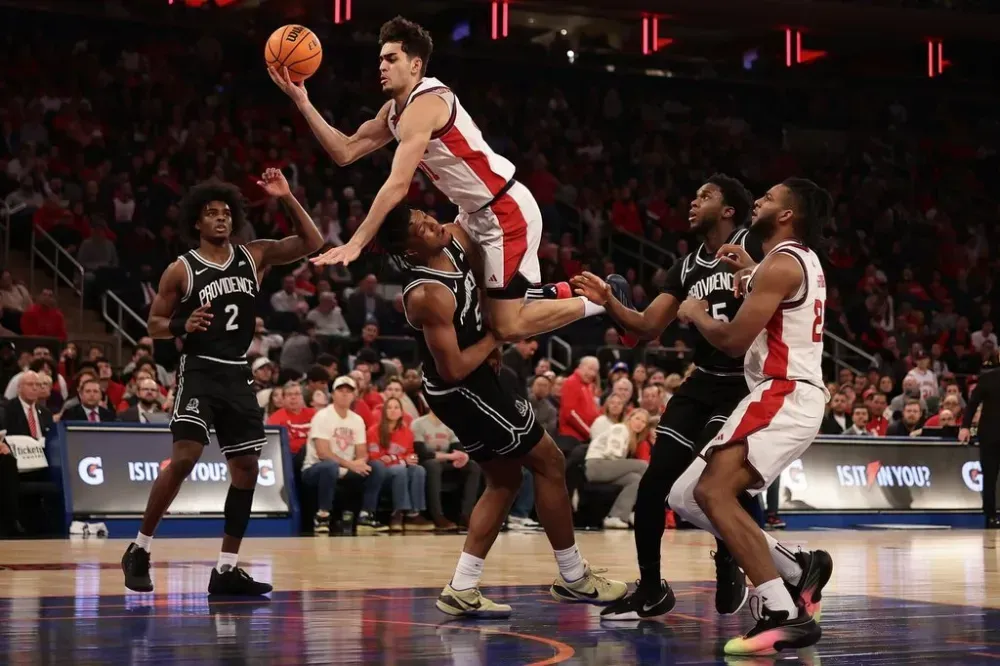
Zuby Ejiofor moved through the game like a fixed point in a shifting room. Everything else tilted. He did not. Thirty-three points came the hard way. Fifteen rebounds came through traffic. Eleven offensive boards were pulled down with two hands and no apologies. Fouls followed him the way shadows follow light. Contact arrived early and stayed late. He absorbed both without complaint, without drama, without retreat.
This did not come from a hot hand. It came from will.
Providence threw bodies at him. He answered with shoulders. They crowded the paint. He carved space anyway. When the moment narrowed and the floor shrank, Ejiofor expanded inside it, demanding the ball and the burden that came with it. He did not wait for relief. He did not search for an exit. He kept going back into the fire because that is what pressure-tested players do.
The evidence sharpened there.
Because greatness in moments like this is never neutral. When one player accepts the weight without blinking, it exposes the imbalance around him. Ejiofor did not fail St. John’s.He revealed them. He showed resistance, and where it stopped.
A team cannot borrow courage forever. Shared pressure becomes strength. Carried alone, it becomes isolation.
Ejiofor carried the fight the way leaders do when no choice exists. The problem never came from his height in the moment. It came when the night demanded collective resolve and he stood alone.
The Fracture Line
The rest of St. John’s Red Storm could not shoot.
That is the clean diagnosis. But it is not the full one.
The numbers testified without emotion. Twenty-eight percent from the field. Seven makes from thirty-one from deep. In the second half, as the game tightened and the Garden seemed to inhale and hold it, the shooting sank further, as if the rim had started to move on its own.
Here is the second clue.
Cold shooting did not just hurt the offense. It infected the defense.
This night did not feature forced shots against collapsing bodies. Open looks came. Clean shots waited. The offense created enough space. But trust failed. Shots were rushed. Others were passed up. Too many possessions ended with the clock acting as executioner.
And with each miss, something else slipped.
Instead of answering empty trips by tightening the defense, St. John’s let the misses follow them down the floor. Closeouts softened. Rebounds became harder. Focus drifted. Where elite teams respond to cold shooting by locking down, St. John’s allowed the frustration to travel. The shooting woes became a distraction, not a challenge.
From above, it did not look like confusion. Confusion makes noise. This moment stayed quiet. Feet stalled. Shoulders tightened. Heads dropped too long. Defensive possessions that once ended cleanly now required extra effort, extra scrambling, extra hope.
That is where games tilt.
Cold shooting happens. Teams survive it every season.
What does not survive is divided attention.
January, missed shots bruise you.
In March, they bury you. Especially when they pull your defense apart with them.
Because when shots stop falling and belief stops traveling, the game changes its rules. Possessions grow heavier. The floor shrinks. Defense loses its edge. And once frustration distracts from execution on both ends, the outcome is decided well before the final score confirms it.
The Pattern Emerges
The ending felt familiar in the most damning way. Not dramatic. No chaos. Predictable.
This version of St. John’s Red Storm is more talented than last year’s group. Deeper. More athletic. Smarter on paper. The basketball IQ is higher across the roster. Skill sets are broader. The ceiling is obvious.
And yet, when the pressure arrived, they did not rise to it. They receded from it.
The game slowed because the game learned it could. Providence turned the dial down and waited for execution to become mandatory. That is the moment where talent stops mattering and internal structure takes over.
That is where St. John’s has failed before.
And this group still fails now.
The floor tightened. Passing windows shrank. Every possession demanded clarity instead of creativity. This is the exact moment when good teams simplify and great teams impose. Last year’s group imposed. This one hesitated. The ball stuck. Cuts slowed. Screens arrived a beat late. Spacing blurred. What should have been five connected minds became five separate solutions.
This is not a knowledge problem.
But a resilience problem.
These players understand the game. They read defenses. See counters. What they have not yet installed is the ability to trust themselves when the game turns inward. When noise fades. After help disappears. And the only thing left is decision-making under stress.
This is the resilience test.
And this team keeps answering it the same way.
Providence did nothing exotic. They packed the paint. Rebounded misses. Forced St. John’s to finish possessions instead of beginning them. Each challenge got basic. Every response required belief more than brilliance. And each time the pressure demanded ownership, St. John’s blinked.
The evidence is cumulative. Close games do not break this team early. They break them at the point of responsibility. When the margin narrows. The crowd tightens. Clock grows loud. That is when this group stops trusting what it knows and starts looking for relief.
That search is fatal.
It slows movement. Fractures attention. Replaces command with hope. And hope stretches time. Time empowers doubt. Doubt invites collapse.
Providence did not steal the night. They asked the same question other teams have already learned to ask.
Can you win from within when nothing is free?
St. John’s answered the way it has too often this season. Not with a failure of effort. But a failure of installation. With pauses instead of punches. Waiting instead of commanding. The door did not slam shut. It closed slowly and completely, because no one stepped forward to force it open.
That is how experienced teams win close games.
Not by overwhelming you.
They expose what you have not finished building.
The New Reality of the League
Last season, St. John’s Red Storm moved through the Big East like something unexpected and dangerous. They finished 31–5. Took the conference. Arrived early and left late, catching teams before belief had time to organize. Their opponents did not prepare to win. They prepared to endure.
That season is finished. Its protections are gone.
This version of St. John’s enters every building announced. Ranked. Scouted. Studied. Circled in ink. Eight new players walked into a program that no longer sneaks up on anyone. The jersey now carries consequences. Every opponent understands the assignment immediately. Beat St. John’s and you earn credibility. Beat St. John’s and the room remembers you.
The league is no longer cautious. It is eager.
You could feel it in the Garden. Providence played loose, hungry, unburdened. They played like a team that understood the moment could be theirs if they were willing to take responsibility for it. They had nothing to defend. Nothing to protect. Only opportunity.
St. John’s carried the opposite weight. They carried last March. Carried banners and headlines. And the assumption that control would eventually convert itself into closure. That weight showed when the game stopped being about momentum and started being about execution.
Being hunted changes everything.
The Big East does not chase St. John’s talent anymore. It interrogates their nerves. Teams test them late. They slow the game. They crowd possessions. They wait to see who grows rigid first. They trust pressure to ask a question St. John’s has not yet learned to answer consistently.
Talent announces you.
Resilience keeps you alive.
Until this group accepts that every night is a trial, every close game a referendum, the league will continue to show up energized, not to survive St. John’s, but to find out whether they can still be broken.
What Has Not Transferred
Ability never defined the difference. Ownership did. Last year’s group ended possessions; this group survives them.
Last year’s group did not wait for permission in late moments. They recognized them. They stepped into them together. Close games felt familiar because they had already been lived through, already been survived. Pressure did not feel foreign. It felt earned.
This group has not learned to stay still when discomfort arrives.
When the floor shrinks and the clock grows loud, there is a moment when teams either settle into themselves or begin to look outward for relief. Last year’s team turned inward. This one still searches. You can see it in the glances. In the pauses. In the way responsibility hovers instead of landing.
Resilience does not travel with recruiting rankings. Nor does it arrive through reputation or expectation. Only through repetition under stress does it install itself. Through possession after possession where the margin disappears and the only thing left is trust, in the work, in the moment, in each other.
Nights like this one are where that installation either takes hold or stalls.
The air tightens. Space vanishes. There is no escape route left. What remains is belief or the absence of it. Right now, this group is still negotiating that moment instead of owning it. They are learning the cost of waiting.
The structure is there.
Talent is real.
But until resilience becomes shared instead of hoped for, the transfer remains incomplete. And close games will keep finding the same fault line.
The Office Down the Corridor
No investigation avoids the name Rick Pitino.
The system is not on trial. It has already passed that test. The habits are real. The discipline is documented. Last season’s banner hangs as proof that the blueprint works when it is lived all the way through. What has not yet arrived is transferability.
Systems move faster than people. Culture moves slowest of all.
New rosters do not inherit resilience the way they inherit terminology or sets. They push against it first. They test its edges. They resist the discomfort before they accept its necessity. January losses feel cruel because they remove the illusion that time alone will fix this. They expose what repetition has not yet hardened.
This is where coaching becomes less about instruction and more about insistence. You can teach spacing. You can drill execution. You cannot force belief on a deadline. Belief arrives only after being cornered by pressure and choosing not to blink.
From the press row, the question never hovered around Pitino’s methods. Those are settled. The question hovered over the room itself. Has this group agreed to pay the full cost of what is being asked? Or are they still hoping the answer arrives without the suffering?
Until that question is settled, the late moments will continue to feel heavy. Not because the system fails, but because the final step of acceptance has not yet been taken.
Providence as Mirror
Providence did not overpower anyone. They did not dazzle. Did not arrive with fireworks or force. They executed.
They rebounded when the ball came loose and the moment grew heavy. They stepped into open threes without hesitation. They did not rush shots or chase noise. As the Garden leaned forward and the air thickened, they remained level, as if the pressure belonged to someone else.
No bravado here. Preparation met opportunity.
Providence understood the terms of the moment. They knew St. John’s would be asked to finish, not start. They trusted that patience would expose the stress point. And when it did, they collected the game one possession at a time, calmly, efficiently, without apology.
That is what March rewards.
Not talent alone.
Not momentum.
But teams that recognize when the game has turned into a test and answer it without drama.
Providence did not win because they were better for forty minutes. They won because they were better when the game stopped being about basketball and started being about nerve.
Reading Ahead
This loss does not end St. John’s Red Storm. It defines the terms of what comes next.
The clues are no longer hidden. They sit in plain sight, waiting to be acknowledged. Who calls for the ball when the possession matters more than the score. Who slows the moment instead of speeding it up. Who breathes when the room closes in and the clock grows loud. January strips away illusions. February forces choices. March delivers judgment without appeal.
Right now, resilience lives in fragments. It appears in flashes. It rises in one body and hopes others will follow. That is not enough. March does not reward hope. It rewards habits that survive panic.
If St. John’s is to survive what waits, resilience must stop being borrowed from a single player and start being shared across five. Pressure cannot belong to one set of shoulders. It has to become communal, familiar, almost welcome. The ball has to feel lighter late, not heavier. Decisions have to arrive faster, not slower.
Until that happens, close games will continue to ask the same question. And the answer will not change until the team does.
Leaving the Scene
The crowd did not rush for the exits. It drifted.
At Madison Square Garden, fans moved the way people do when something they trusted has slipped out of reach. Conversations trailed off mid-sentence. Heads shook without explanation. Some lingered in their seats, staring at the floor as if the last few minutes might rewind if given enough time. Others pulled coats tight and stepped into the cold without speaking at all.
Disbelief hung in the air, not anger.
They had seen this movie too many times already. A lead. Control. A tightening finish. And then the same quiet ending, where the building empties faster than the answers arrive. The Garden knows the difference between a bad night and a troubling pattern. So do its fans.
As the floor cleared and the lights softened, a different tension settled in. Not about this game, but about the season it pointed toward. Is this group still learning, or is this who they are? Could a team this talented still be trusted in March? Could it even survive the grind of the Big East, where close games are not exceptions but currency?
Those questions followed the crowd into the night.
The calendar moved forward, whether anyone is ready or not. The league would not wait. The pressure would not ease. Every road game, every late possession, every February night would ask the same thing again.
The Garden had spoken plainly.
This season will not be defined by how St. John’s Red Storm plays when free.
It will be defined by how they breathe when the room closes in.
The evidence is already on the floor.
#StJohnsBasketball #BigEast #MarchMadness #CollegeBasketball #RickPitino #Resilience #WinningTime #LateGameExecution #DefensiveRebounding #BasketballIQ #ShardsOnTheFloor #RelentlessRedstorm #GardenPressure #BuiltForMarch